
Getting Unstuck Might Just Be a Matter of Perspective
- Lan Doan
- Aug 30, 2024
- 3 min read


You might be reflective and proactive, with clear and logical thoughts about their needs and a strong commitment to personal growth. Yet, despite this, you still encounter reservations about your next steps and feel the need for a different approach to break free from your current patterns.
You could use a “reframe” to adopt a new perspective and overcome your “stuck” situation.
First, reframe how to make choices: Stop making Pros and Cons lists
Pros and cons lists don’t work when there is no clarity of goal (what success looks like) and evaluation criteria (which factors actually matter).
Using a problem-solving framework, such as design thinking, can yield much better clarity. In a 5 step approach, you can go through the process of “diverging & converging”. Diverging opens up possibilities of solutions (from “I must choose between these two choices now” to “Is there a third, fourth, and maybe fifth choice that might work?). Converging involves setting clear criteria for choice selection (e.g., Identify your 3 priorities and use them to rank the options based on these criteria).
Second, reframe asking and offering help: the Power of Peer Coaching
Peer coaching might be a new concept for many, but it it a valuable tool to reframe. 2 participants can take turns as coaches and coachees following a simple script. The peer coach is not expected to give advice. Instead, they were there to hold the space for the coachee to feel heard and acknowledged. By building upon the ideas of the coachees (instead of providing their evaluation/judgment), the peer coach can enable the coachees to be creative and courageous beyond their usual state.
Studies show that a supportive environment can help a person be creative and self-sufficient, increasing their capability to make good decisions [1], [2], [3]. Maybe it is time to ask for “understanding” instead of “help” and for “perspective” instead of “advice.”


Peer Coaching allows the expansion of perspectives
Finally, reframe how you see yourself: Embrace Self-Compassion Strategically
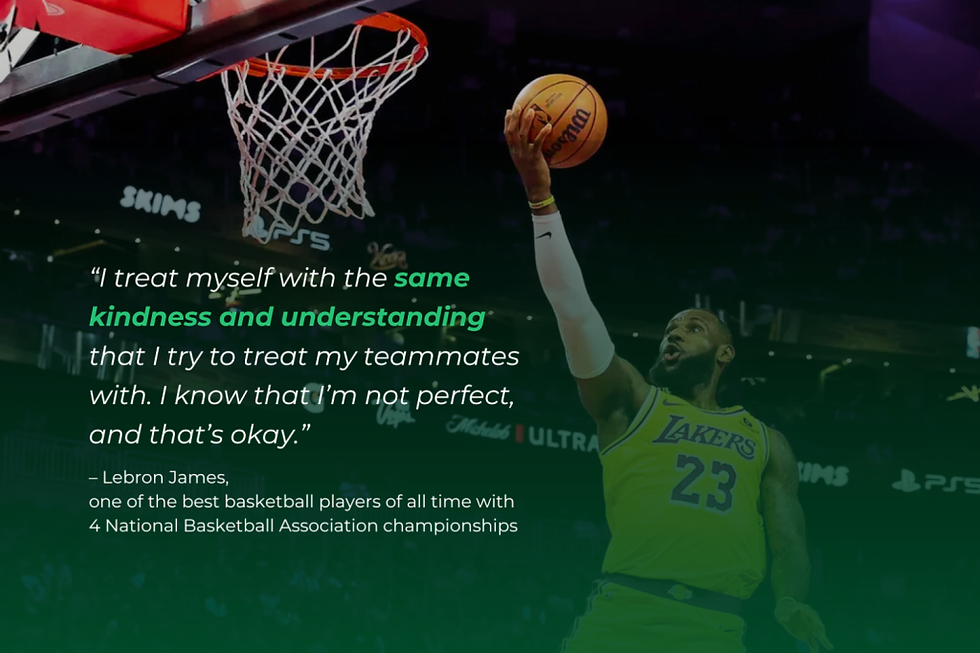
In many cases, we are the harshest judge of ourselves. You might find it easier to maintain a positive view of others who show signs of vulnerability and ask for help. However, you struggle to do the same for yourselves. It’s almost like each person can be their own “peer coach” – being kind, understanding, and playful at times.
The reframe shifts the focus from optimizing problem-solving skills to taking care of the “problem solver”. Even the strongest, most confident problem solvers need acknowledgment to boost their performance. No one can “flex” all the time. Intentional self-compassion can calm the nerves, neutralize stress, and free up the minds for creativity and clarity.
The capability to reframe is a skill best gained with support. And maybe the most important thing to reframe is the concept of “help.” Help doesn’t mean something given from someone superior to someone inferior. It might just be an agreement between two people who can be of service to each other in a way that can bring some value to both the giver and the recipient.The capability to reframe is a skill best gained with support. And maybe the most important thing to reframe is the concept of “help.” Help doesn’t mean something given from someone superior to someone inferior. It might just be an agreement between two people who can be of service to each other in a way that can bring some value to both the giver and the recipient.
REFERENCES:
[1] Jakubiak, B., Tomlinson, J.M. (2020). The Role of Social Support in Promoting Self-Development. In: Mattingly, B.A., McIntyre, K.P., Lewandowski, Jr., G.W. (eds) Interpersonal Relationships and the Self-Concept. Springer, Cham. https://doi.org/10.1007/978-3-030-43747-3_8
[2] Tan, C.S., Chin, X.Y., Chng, S.T., Lee, J. and Ooi, C.S. (2022) ‘Perceived Social Support Increases Creativity: Experimental Evidence’, International Journal of Environmental Research and Public Health, 19(18), p. 11841. doi: 10.3390/ijerph191811841.
[3] Zhou, A., Liu, J., Xu, C. and Jobe, M.C. (2024) ‘Effect of Social Support on Career Decision-Making Difficulties: The Chain Mediating Roles of Psychological Capital and Career Decision-Making Self-Efficacy’, Behavioral Sciences, 14(4), p. 318. https://doi.org/10.3390/bs14040318.

Comments